
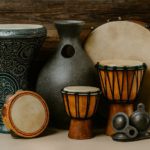




Music among Africans is not simply entertainment; it is life itself. Music brings people together in celebrations or rituals, narrating stories and sharing traditions. In this fertile heritage, percussion instruments are central in the formation of the rhythms and sounds that shape African music. These tools, ranging from drums and rattles to bells, are embedded in the cultural and religious life of African populations. Percussion in African music is not only an instrument but a means of communication, cultural retention and contact with the divine.
The African Music Foundation
Percussion is the pillar of traditional African music. It doesn’t just bring rhythm to a melody. It also links the musicians with their listeners. African Drumming data reveals that the use of percussion instruments engages in storytelling. They are the beat of African music. Not to mention, they are the rhythms produced by these instruments.
Drumming, particularly, occupies a special niche in African culture. It is also employed to communicate. It may be to say the beginning of a leader, to count the steps of a ritual, or to rejoice at a harvest, but the beat of the drums addresses the populace and gives them a common projection.
Cultural Importance of Percussion Instruments
Percussion instruments are not merely musical instruments in African cultures; they are cultural symbols as well. One of the most renowned African drums, the djembe, is commonly played during significant occasions. These include weddings, births, and funerals. Every beat on the djembe has a profound significance. These are usually symbolic rhythms that reflect the beliefs of the community.
Percussion instruments like the drums are usually played by talented musicians. These musicians have spent years learning to master the generations-old rhythms. African Drumming has taught these rhythms in a manner that links young people to their cultural heritage.
The Significance of Percussion in Rituals & Ceremonies
In African rituals and ceremonies, percussion instruments are critical. They are not just musical instruments. They are also lines through which individuals speak to the spiritual world. Many cultures in Africa believe that drums communicate with spirits or gods. Plus, certain rhythms are believed to attract certain gods or ancestors. Drumming may also be used to form a sacred aura. For them, this brings the spiritual and physical realms in closer touch.
In certain cultures, the beat of the drums is believed to be a direct connection to the divine. Thus, it is not just critical in rites of passage. It is also critical in spiritual activities. As explained byAfrican Drumming experts, the rhythms are said to bear power. Not to mention, it establishes a linkage between the living and the spirits. In turn, this leads the community through critical events in their lives.
The Social Role of Drumming
Drumming is also a social bond within African societies. It is not a performance to an audience. Rather, it is an invitation to the community to participate. In the communal drumming, all people- irrespective of age or ability- join in. They do so either by instrument playing, singing, or applauding to the beat. This common experience creates a feeling of unity and belonging.
Social interactions with drums are not confined to official gatherings. Drumming in villages is a way of life. It often brings people together at festivals. Such shared drum circles offer them a space to express themselves. This helps to build communal ties. But the beat of the drum doesn’t juststrengthen social bonds. It also assists in establishing the identity of a community.
Histories of African Drumming in Contemporary Society
The African tradition of drumming remains essential to the cultural fabric. But the form has transformed over the course of modern times. African drumming is no longer exclusive to the traditional context. Today, it has permeated through the modern music genres. These genres include jazz, pop, and world music. Contemporary drummers don’t just incorporate traditional African rhythm. It also incorporates other musical styles into one synergetic genre. This demonstrates that African percussion can be both diverse and modern.
The rich history of African percussion is further honoured through drumming festivals. Their instruments are now known and valued across the globe. This combination of traditional and modern elements makes African drumming have a worldwide influence on musicians.
The Importance of Percussion in Education & Preservation
The world is becoming increasingly globalized. So, it is important that the traditions of African drumming are passed on to the coming generations. In Africa, young people are not just taught how to play the traditional instruments. They are also taught how to preserve the cultural knowledge and skills. These skills and knowledge are often required to sustain these rhythms. Such pedagogical work is vital in preserving the connection between the generations. In turn, this ensures that the Cultural relevance of African percussion is not forgotten.
African percussion knowledge is also being disseminated globally. This is not just through drumming workshops. It is also done through community projects. Via these efforts, individuals of all walks of life can become acquainted with the cultural significance of drumming. Not to mention, theycan share the delight of performing African percussion. This does not just maintain the tradition. It fosters the following, too:
- Cross-cultural understanding
- Appreciation
In conclusion, African societies have incorporated percussion as part of their cultural identity. It doesn’t just link the music to history. It also links it to communal life. Drums and other percussion instruments play a key role in the expression of African culture. They do that through ceremonial rituals and social gatherings. This is because African drumming rhythms form a language that surpasses speech. In turn, this provides a medium of communication that connects people to their history. African drumming keeps evolving and shaping world music. However, its cultural value has never been more potent. African percussion will ensure that these rhythms endure across generations. It does that by adapting to change. This, in turn, shapes the future of the soundscape. Therefore, concerts in Africa are not just a testament to the hospitality of rhythm. They have the capability to connect people, too.